


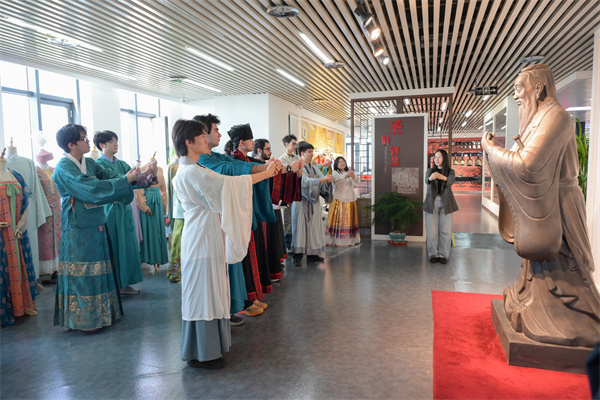
 The program began at the Chinese Traditional Culture Research and Experience Base of Shandong University, where international students participated in immersive cultural activities under the guidance of professional instructors. Dressed in traditional Hanfu attire, participants performed ceremonial bows before a statue of Confucius, experiencing the traditional values of respecting teachers and honoring learning.
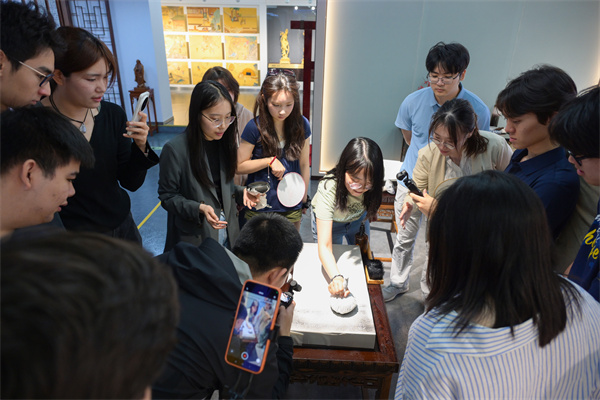
Students also took part in the traditional art of stone rubbing, completing procedures including paper mounting, moistening, pounding, inking, and lifting impressions. Through the process, they experienced the preservation of ancient inscriptions and historical records through traditional craftsmanship. Participants further explored the ritual and music culture of ancient China by striking replicas of bronze chime bells and listening to the resonant sounds associated with pre-Qin ceremonial traditions and Confucian educational philosophy.
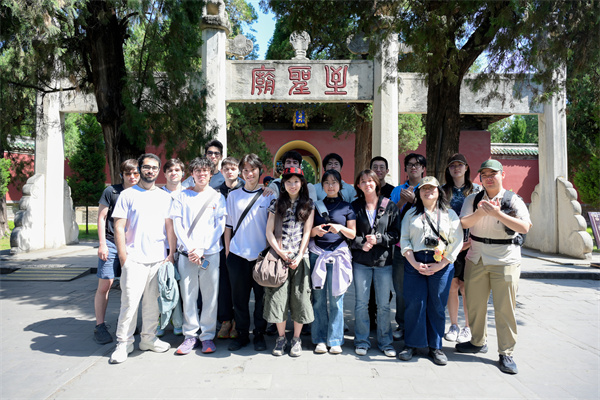
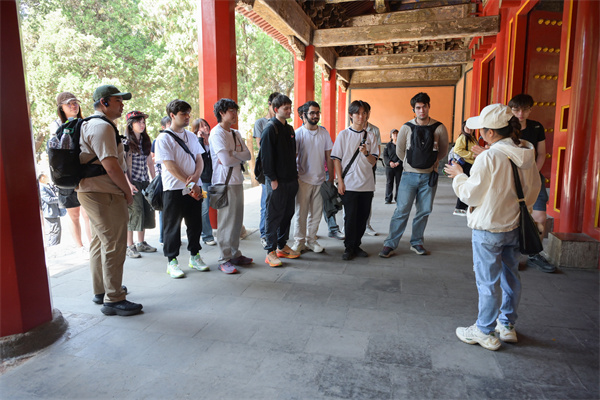
The delegation then traveled to Qufu to visit the “Three Confucian Sites” — the Temple of Confucius, Confucius Family Mansion, and Cemetery of Confucius. Walking through the historic courtyards of the Confucius Temple, participants reflected on Confucius’ educational philosophy of “teaching without discrimination.” At the Confucius Family Mansion, they observed the ceremonial traditions and family culture that have been passed down through generations, while the visit to the Cemetery of Confucius offered insight into Confucian values surrounding filial piety and remembrance of ancestors.
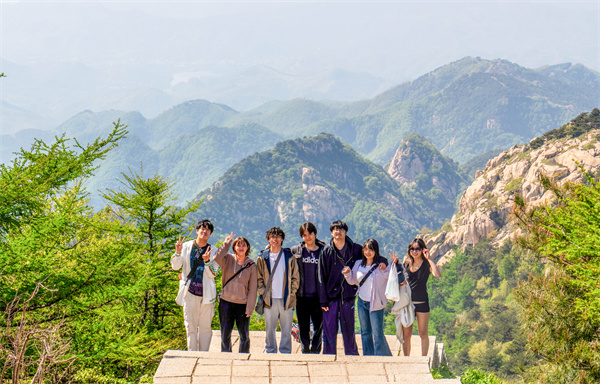
The final stop of the program was Mount Tai, one of the most culturally significant mountains in China. During the climb, participants experienced the Confucian concept of self-cultivation through perseverance and humility. Reaching the summit and overlooking the Qilu landscape further deepened their understanding of the philosophical ideal of harmony between humanity and nature.


