


Shanghai Jiao Tong University (SJTU) hosted the 2026 People-to-People Cultural Exchange Event themed “Resonance of Chinese Opera, Everlasting Friendship” on September 21, the International Day of Peace, at its Minhang campus. Featuring traditional Chinese opera and regional intangible cultural heritage, the event brought together Chinese and international youth through artistic exchange and hands-on cultural experiences, promoting mutual understanding among civilizations and strengthening friendship across cultures.
The event was organized by the Shanghai Overseas Returned Scholars Association (SORSA) and co-organized by its SJTU and Minhang branches, Shanghai Jiao Tong University Global College (SJTUGC, abbreviated as GC hereafter), and the Minhang District Federation of Returned Overseas Chinese. More than 400 Chinese and international faculty members and students, representatives of the overseas Chinese community in Minhang, and cultural enthusiasts attended.
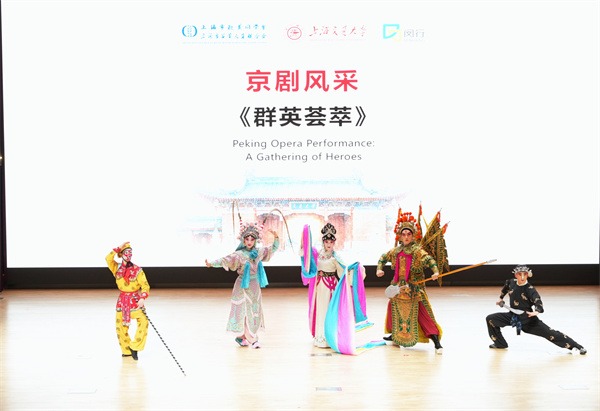
The opening ceremony, held at the Student Activity Center on the Minhang campus, began with a Peking Opera performance, A Gathering of Heroes.

SORSA Vice President Ansheng Zhang, who is also president of its SJTU branch, delivered a welcome address. He noted that the university is celebrating its 130th anniversary this year. Upholding its founding commitment to pursuing practical learning and serving the nation through industry, SJTU has long aligned its development with China’s national progress. He expressed the university’s commitment to working with Minhang District to leverage their complementary strengths in cultural exchange, people-to-people connections, and public diplomacy. He also expressed the hope that the two sides would continue to promote mutual learning among civilizations, contribute to building a community with a shared future for humanity, and advocate peace and development.

Official launch ceremony of the event

The themed event was officially launched in the presence of the guests. The Minhang and SJTU branches of the Shanghai Overseas Returned Scholars Association exchanged commemorative gifts, further strengthening their ties. The ceremony also marked the opening of the exhibition Colors in Miniature, Sparks in Harmony: Wei Qing’s Opera Matchbox Label Collection. GC students presented flowers to Wei Qing, the collector.
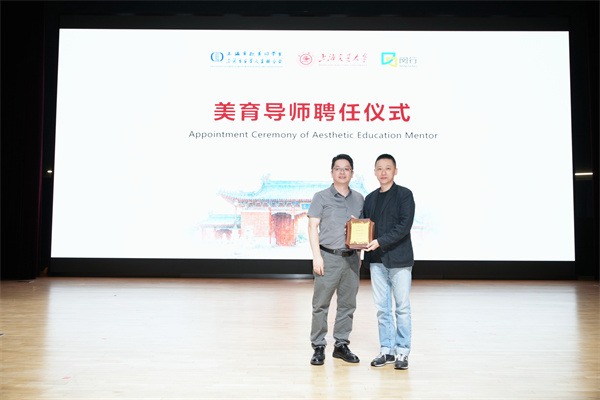
As part of GC’s commitment to aesthetic education and students’ all-round development, Chairman of the GC Council Yanchun Yang presented an appointment certificate to Qinggu Yan, a national first-class performer at the Shanghai Peking Opera Theatre and a renowned Peking Opera artist, appointing him as an aesthetic education mentor.

Qinggu Yan then delivered a keynote speech titled Appreciating the Essence of Chinese Opera · Enjoying the Beauty of Peking Opera Melodies. He introduced the origins and development of Peking Opera and the rigorous training required of its performers. Through vivid explanations and demonstrations, he offered Chinese and international audiences an engaging introduction to the art form, earning enthusiastic applause.

Jing Du, a member of the SJTU Opera Association, presents an excerpt from the Peking Opera piece The Heavenly Maiden Scatters Flowers.
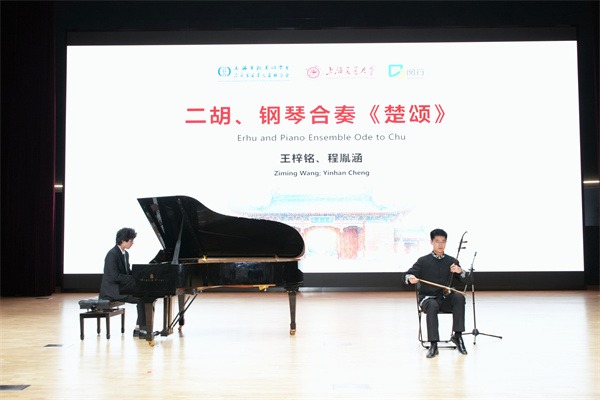
Ziming Wang, an undergraduate student at GC, and Yinhan Cheng, an undergraduate student at the Paris Elite Institute of Technology, perform the erhu and piano ensemble Ode to Chu.

The Maqiao Hand Lion Dance Team join international students from GC in a Dragon and Lion Dance
Exploring the stories behind opera matchbox labels
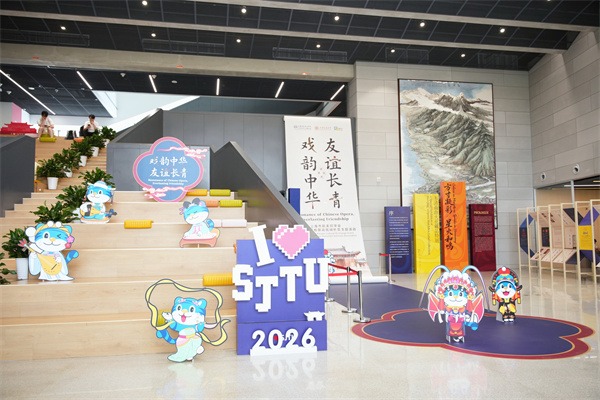
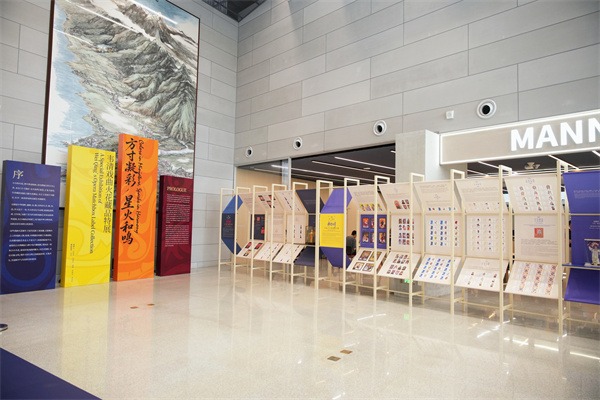
The exhibition attracted many Chinese and international students in the lobby of the Student Activity Center near Huanze Lake on campus. The small matchbox labels, carrying more than a century of cultural memories, featured colorful Peking Opera masks and offered visitors a glimpse into the enduring heritage of Chinese opera.
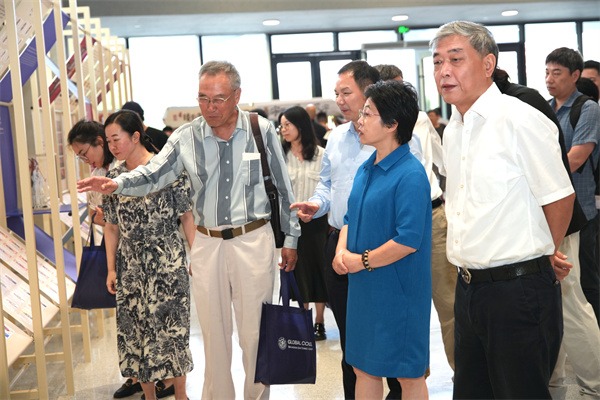
According to curator Fantao Zhang, the exhibition explored how matchbox labels have served as vehicles for cultural exchange. During the period of modern commercial trade, foreign matchbox labels brought images and cultural influences from around the world to China, while Chinese opera-themed labels carried elements of Eastern aesthetics overseas.
Through these miniature works, the exhibition highlighted how cultural dialogue transcends geographical boundaries. Its theme, Colors in Miniature, Sparks in Harmony, reflected both the artistic richness of Peking Opera and the value of these cultural collections, while symbolizing the exchange of artistic traditions and the bonds of friendship between people from different countries.
Experiencing China’s intangible cultural heritage
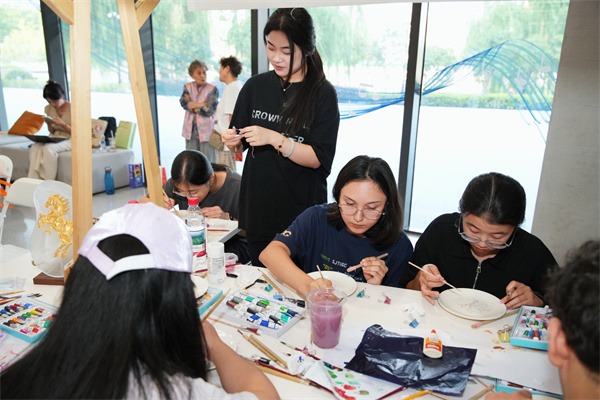
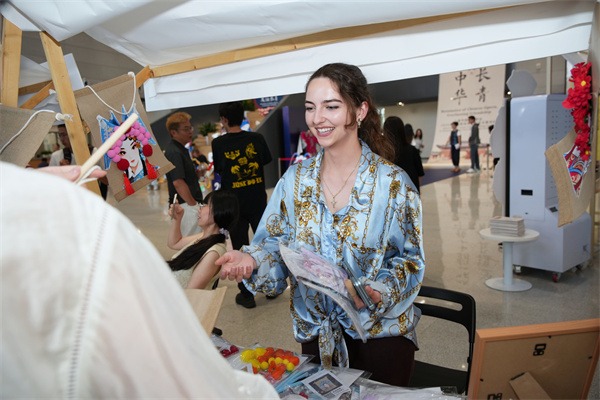
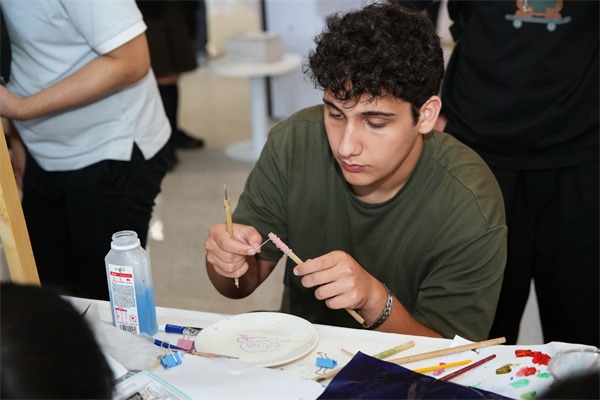
Running alongside the exhibition, the cultural festival Discovering the Charm of Chinese Intangible Cultural Heritage offered a wide range of hands-on activities. The experience area featured traditional crafts and cultural activities, including Zhanqiao paper-cutting, Chinese calligraphy, bodiless lacquerware, sachet-making, tea culture, dragon-and-phoenix character art, colored clay sculpture, and painted opera masks.
Chinese and international participants tried their hands at cutting paper, writing calligraphy, and making traditional handicrafts. Through these shared experiences, they discovered the craftsmanship and distinctive aesthetics of Chinese cultural traditions, building connections across linguistic and cultural differences.
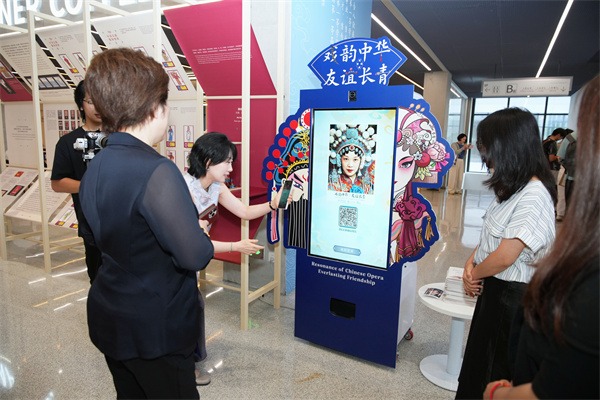
A generative artificial intelligence (AIGC) interactive installation also proved popular with students. By combining digital technology with traditional opera costumes and makeup, it generated lifelike portraits of participants dressed in traditional opera attire. The installation offered a creative way for young people from different cultural backgrounds to engage with Chinese opera and experience its contemporary appeal.


