


The Cornell@SJTU Student Visiting Program 2026, organized by Shanghai Jiao Tong University (SJTU) Office of International Cooperation and Exchange, was successfully held from May 22 to 29. Jointly hosted by Shanghai Jiao Tong University Global College (SJTUGC, abbreviated as GC hereafter) and the School of Design, the program brought together faculty and students from Cornell University representing disciplines including architecture, design, mechanical engineering, and computer science.
Through academic exchanges, industry visits, cultural activities, and interdisciplinary innovation projects, participants explored Shanghai and Suzhou, gained firsthand insights into China’s technological and social development, and strengthened cross-cultural understanding and friendship.
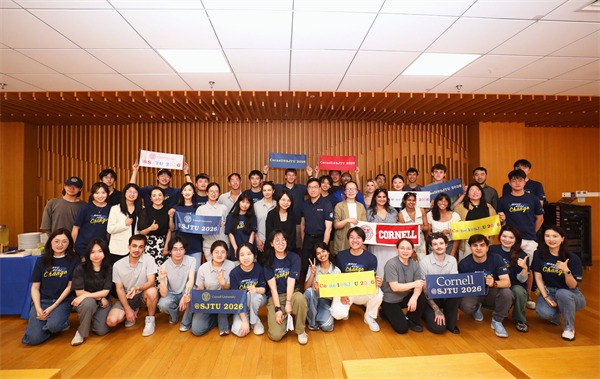
Opening ceremony launches week-long exchange
The opening ceremony was held on May 23 in Long Bin Building. Qian Wang, deputy director of SJTU’s Office of International Cooperation and Exchange; Ziqi Zhang, vice dean of the School of Design; David Hung, associate dean of GC; GC Professor Kwee-Yan Teh; and Cornell University professors Ying Hua and Ke Zhang attended the event. The ceremony was hosted by Viva Du, manager of GC’s International Programs Office.

In her welcome remarks, Qian Wang encouraged the visiting students to explore China and Shanghai with openness and curiosity, noting that many participants were visiting the country for the first time. She expressed hope that the program would provide opportunities to experience a dynamic and multifaceted China through direct engagement and exchange.

David Hung encouraged students to make full use of the opportunity and transform the experiences, knowledge, and friendships gained during the program into valuable assets for their future development.

Ziqi Zhang reviewed the longstanding collaboration between the School of Design and Cornell University and encouraged participants to draw inspiration from the city, culture, and everyday life around them through observation, discussion, and practice.
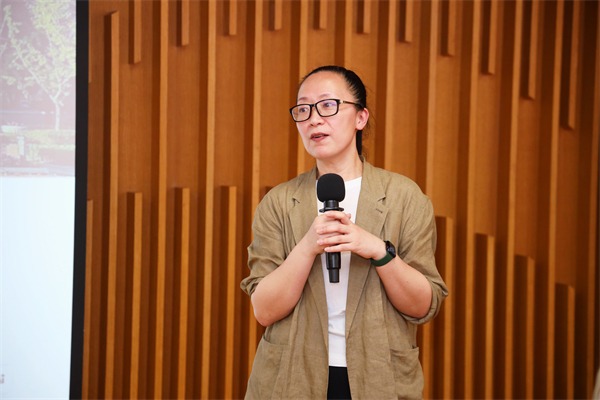
Drawing on her own experience in collaborative programs between the two universities, Ying Hua highlighted the importance of cross-cultural exchange in fostering mutual understanding and lasting connections, which serve as a foundation for future cooperation and innovation.

Raaziq Masud Brown, a student representative from Cornell University, noted that the diversity of nationalities and academic backgrounds among participants created valuable opportunities for collaboration and learning throughout the program.

During the ceremony, Kwee-Yan Teh introduced the “99% Invisible Challenge,” an innovation competition that invited students to uncover and present aspects of Shanghai that often remain unseen or overlooked by the public through the perspectives of design and engineering.

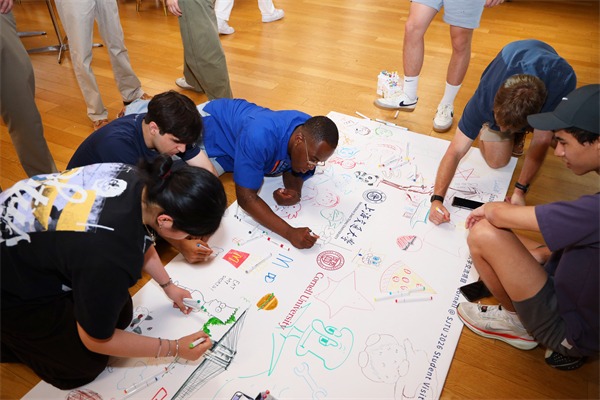
Students from Cornell University and SJTU collaborate on a joint canvas artwork during the opening ceremony.
Exploring China through culture and city life
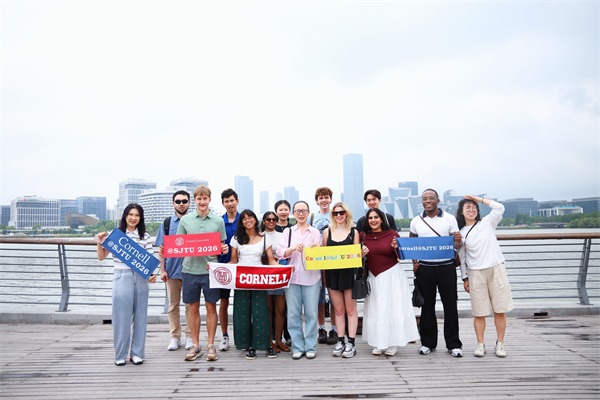
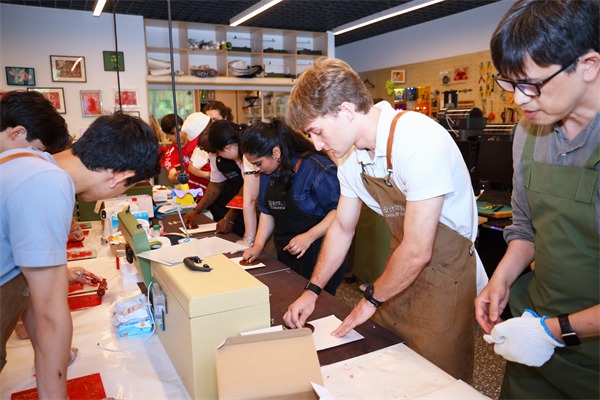
Throughout the week, students visited SJTU’s Minhang Campus and explored some of Shanghai’s most iconic landmarks, including Yuyuan Garden, the Bund, and the Huangpu River waterfront. These activities provided participants with a deeper understanding of Shanghai’s urban development and international character. Students also experienced traditional Chinese rubbing techniques and visited Xinchang Ancient Town, gaining firsthand exposure to Chinese cultural heritage.
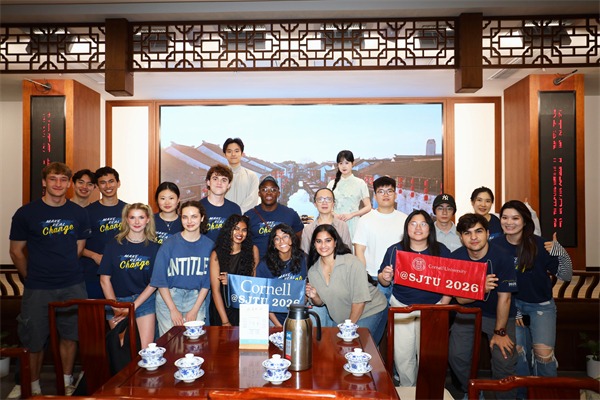
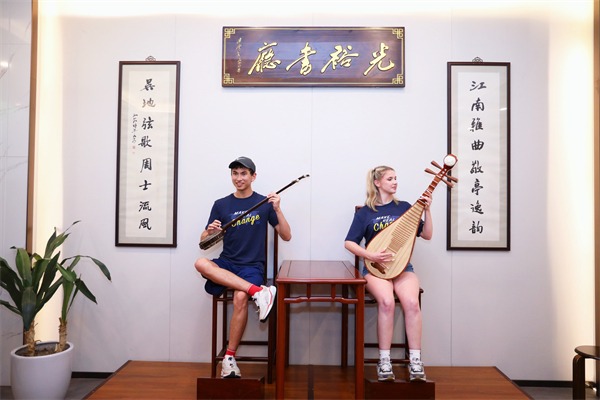
A cultural excursion to Suzhou further enriched the program. Participants attended a Suzhou Pingtan performance, toured the Humble Administrator’s Garden, and visited the Suzhou Museum, where they explored the history, aesthetics, and cultural traditions of the Jiangnan region. The cultural activities provided both a broader understanding of Chinese society and inspiration for subsequent innovation projects.
Academic and industry engagement

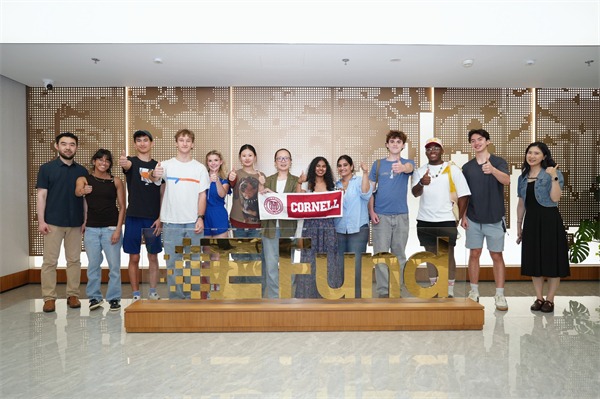
The program featured a range of academic and industry-oriented activities. Participants visited GC and the School of Design and attended two academic lectures delivered by Cornell faculty members.
To gain a deeper understanding of China’s innovation ecosystem, students also visited leading enterprises and innovation platforms, including United Imaging Healthcare, E Fund Management, and SJTU Zhibang Technology Co., Ltd. Through site visits and discussions with industry representatives, participants learned about developments in high-end medical equipment, intelligent manufacturing, technological innovation, and industrial development.
The visits offered valuable opportunities for students to connect classroom learning with real-world applications while gaining insights into China’s rapidly evolving technology landscape.
Interdisciplinary teams tackle innovation challenge
A highlight of the program was the “99% Invisible Challenge,” which ran throughout the exchange week. Centered on the theme of discovering new perspectives on Shanghai, the competition encouraged students to examine the city’s architecture, culture, traditions, and urban environment and identify stories and experiences that often remain outside public attention.
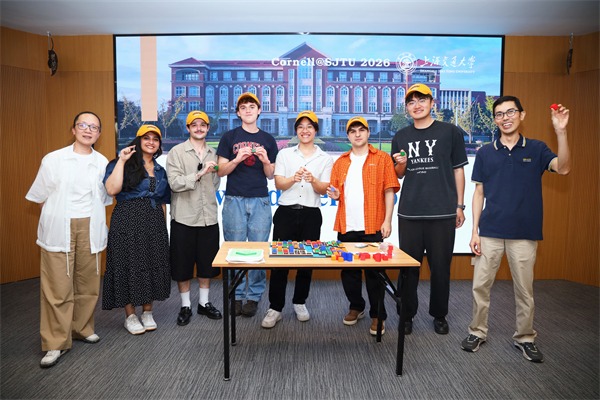
Group photo of the team winning Best Design Award
Students from Cornell and SJTU formed interdisciplinary teams that combined expertise in architecture, design, engineering, and computer science. Working through observation, research, brainstorming, prototyping, and final presentations, the teams developed innovative solutions while integrating diverse perspectives and approaches.
The competition provided participants with opportunities to strengthen teamwork, creativity, and problem-solving skills while fostering cross-cultural communication and collaboration.
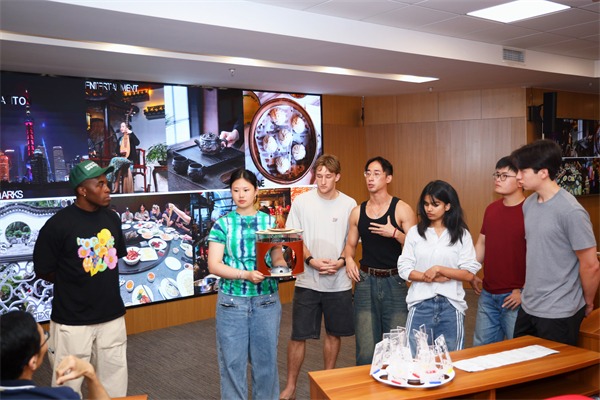
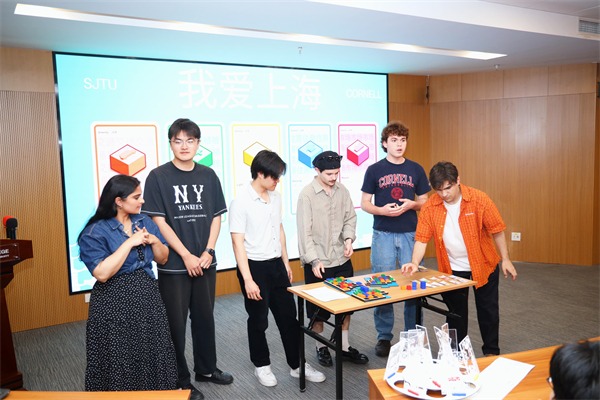
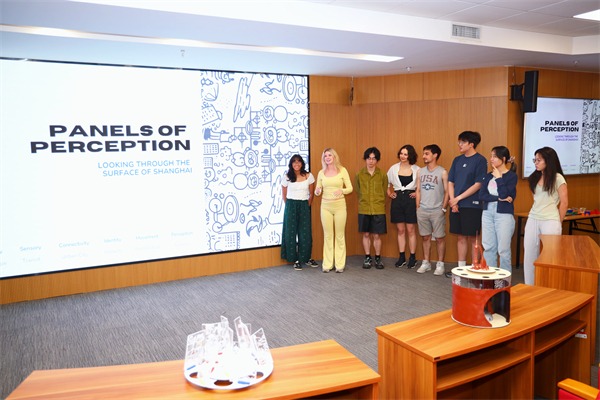
The program concluded on May 29 with project presentations and a closing ceremony. Three teams presented their projects, sharing their design concepts, research findings, proposed solutions, and reflections on the week-long experience.
Following evaluation by a faculty panel, Team Two received the Best Design Award for its project I Love Shanghai. The board game was recognized for its creative concept, well-developed design framework, and effective presentation.
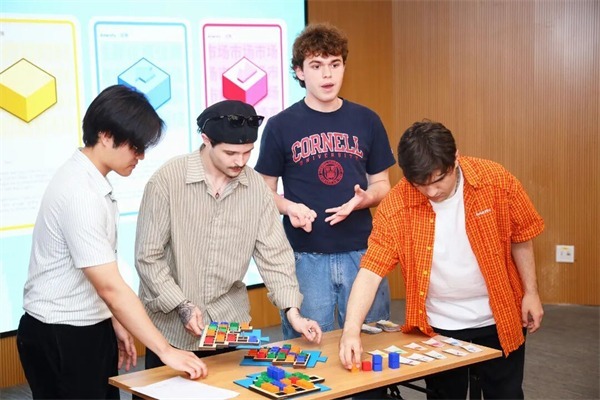
Inspired by Shanghai’s urban development, the game challenges players to build the most livable city using elements such as lighting systems, green spaces, residential communities, and commercial facilities, encouraging participants to think critically about urban planning and quality of life.
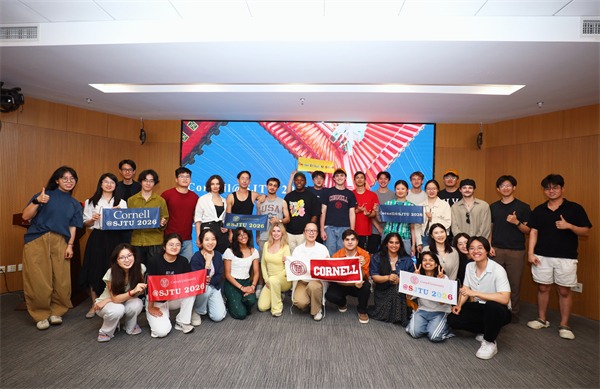
Group photo of event attendees
Strengthening international collaboration
Over the course of the week, students from different countries and academic disciplines learned, explored, and collaborated together through activities in classrooms, companies, workshops, and urban settings. The experience enabled participants to build meaningful friendships while gaining a deeper appreciation of different cultures and perspectives.
The Cornell@SJTU Student Visiting Program further strengthened ties between the two universities and provided a valuable platform for cross-cultural and interdisciplinary exchange. Through initiatives such as this, GC continues to support SJTU’s efforts to expand international cooperation and create opportunities for students from around the world to learn, collaborate, and grow together.
Student Quotes
Sydney Marcum, Cornell University
The most impactful aspect of the program for me was the formation of meaningful connections with others – these relationships hold enduring value that transcends the program’s temporal boundaries. I also felt an unexpected delight in encountering remarkable Chinese architecture, which significantly surpassed my expectations because it is so underrepresented in our architectural history classes. This firsthand experience added an entirely new dimension to my appreciation of the field.
Alan Munschy, Cornell University
I am profoundly impressed by how a single program fostered such a strong sense of unity among diverse individuals from different departments and universities. Although we were temporarily segregated into groups, we always felt a powerful sense of support while exploring cities like Suzhou and Shanghai. The vibrant sights inspired everyone’s creativity and promoted a collaborative atmosphere where ideas flowed freely without hesitation. That open-minded exchange of ideas was incredibly stimulating.
Rita Wu, Cornell University
I was fascinated by the unique architecture and the aesthetic appeal of the skyscrapers here. And I have to highlight the bike infrastructure; being able to bike around Shanghai without needing a car was a remarkable contrast to Miami and Cornell, and it made navigating the city effortless and enjoyable.
Mingye Lu, SJTU GC
After spending this intense week together and forming real friendships, the idea that we can continue these friendships and shared experiences is just incredible. I can’t wait to welcome them again, or to see them on their own campus soon.


