


Degree Programs
Dual Degree Program
The dual-degree program allows students to earn a second bachelor’s degree in engineering or a related field at the University of Michigan. Participants will spend two years in Shanghai followed by two years in Ann Arbor, graduating with two bachelor’s degrees—one from SJTU and one from U-M. The workload is high, but the field of opportunities is vast.
Majors allowed by the Dual Degree program
College of Engineering: Aerospace Engineering, Biomedical Engineering, Chemical Engineering, Civil Engineering, Climate and Meteorology, Computer Engineering, Computer Science, Data Science, Electrical Engineering, Engineering Physics, Environmental Engineering, Industrial and Operations Engineering, Materials Science and Engineering, Mechanical Engineering, Naval Architecture and Marine Engineering, Nuclear Engineering and Radiological Sciences, Space Science and Engineering
College of Literature, Science and Arts: Mathematics, Physics
Application Procedure (3 Steps)
Step 1. Prepare Application Materials
- Official high school transcript
- Official high school diploma or graduation certificate
- English language proficiency test report
Step 2. Work on Common Application
Step 3. Fill out the IPO questionnaire and submit the application materials
Global Degree Pathway Programs

Get a head start on your dream career by joining the Global Degree Pathway Programs! Whether you are interested in environmental engineering, data science, business and management, naval architecture or classical engineering disciplines, these pathways provide a way to jump right into the corresponding Master degree programs at a leading international university.
The application period for the pathways is in or just after the fall term of the third year of study, and you travel abroad and start working in the Master program during the fourth year. Typically, you will return to GC in the summer term during the fourth year to finish the Bachelor degree, before going abroad again and completing the Master degree abroad by the end of the fifth year of your studies.
Study Plans
Depending on the pathway, students spend varying amounts of time at GC’s Global Partner (GP) institution. Please refer to the individual program introductions below for details.
Canada - University of Waterloo


Program Details
This collaboration marks the first time that Global College has partnered with a Canadian university to launch a GDP program. Unlike other programs, the collaboration with University of Waterloo features a unique structure in which the fourth year is completed through an exchange program. During this year, students can take a wide range of courses at Waterloo without paying additional tuition fees to the host institution. They may also take advantage of university resources to engage in research projects, flexibly integrating them into their academic plan based on individual progress.
The program offers a broad selection of master’s degree options across the Faculty of Engineering and the Conrad School of Entrepreneurship and Business. Available fields include popular disciplines such as Electrical and Computer Engineering, Mechanical Engineering, Systems Design Engineering, and Management Sciences.
About University of Waterloo
University of Waterloo is a renowned public comprehensive research university located in Ontario, Canada, widely recognized for its strong focus on entrepreneurship and innovation. The university ranks among the world’s leading institutions in computer science, engineering, and education. Its key strengths include disciplines such as Computer Science, Environmental Science and Engineering, and Physics, all of which are among the top in Canada.
In particular, its Computer Science program has ranked first in Canada for four consecutive years and is consistently placed among the top 25 worldwide. In addition, the University of Waterloo hosts the world’s largest co-operative education (Co-op) program, offering students extensive opportunities to integrate academic learning with practical work experience.
Program Requirements:
- TOEFL: 90 (Writing and Speaking 25). Please note: MyBest scores are not accepted.
- IELTS:0 (writing and speaking 6.5)
- GPA: No specific GPA requirements
Programs Available:
Master of Engineering (MEng) in Chemical Engineering
Master of Engineering (MEng) in Chemical Engineering – Co-operative Program (direct entry)
Master of Engineering (MEng) in Civil Engineering
Master of Engineering (MEng) in Civil Engineering – Co-operative Program (direct entry)
Master of Engineering (MEng) in Electrical and Computer Engineering
Master of Engineering (MEng) in Electrical and Computer Engineering – Co-operative Program (direct entry)
Master of Business, Entrepreneurship and Technology (MBET)
Master of Management Science (MMSc)
Master of Management Science (MMSc) – Co-operative Program (direct entry)
Master of Engineering (MEng) in Mechanical and Mechatronics Engineering
Master of Engineering (MEng) in Mechanical and Mechatronics Engineering – Co-operative Program (direct entry)
Master of Engineering (MEng) in Systems Design Engineering
Program Progression: 3.5+2
| Year 1 | Year 2 | Year 3 | Year 4 | Year 5 | ||
| Fall | Spr. | Sum. | ||||
| GC | Waterloo | GC | Waterloo | |||
China, Hong Kong - The University of Hong Kong


Program Details
The program offers an innovative Bachelor-to-PhD track with the University of Hong Kong (HKU). This pioneering pathway allows third-year undergraduates with research potential to apply for direct PhD admission in HKU’s Faculty of Engineering, ranked among the world’s top 50 in six engineering disciplines. Successful applicants will transition seamlessly to doctoral studies after completing their SJTU bachelor’s degree. This program provides exceptional students an accelerated research career path in cutting-edge engineering fields, combining SJTU GC’s rigorous training with HKU’s world-class research environment.
About University of Hong Kong
HKU is one of Asia’s leading research universities. Its Faculty of Engineering, the oldest engineering faculty in Hong Kong, is recognized for its academic strength and innovation. In the 2023 QS World University Rankings by Subject, six engineering disciplines—including civil engineering and computer science—were ranked among the world’s top 50, reflecting the faculty’s overall academic standing.
Program Requirements:
- TOEFL: An overall score of 85 or above
- IELTS: Overall score – 6.5; All sub-score – not lower than 6
- GPA: Competitive (no specific requirements)
Application: Fall term, Junior year
Program progression: 4+4
| Year 1 | Year 2 | Year 3 | Year 4 | Year 5 | Year 6 | Year 7 | … |
| GC | HKU PhD (Typically in 4 years) | ||||||
China, Hong Kong - The Chinese University of Hong Kong


Program Details
The program offers an exclusive Bachelor-to-PhD/MPhil fast-track opportunity for top engineering students at the Global College to continue advanced studies at The Chinese University of Hong Kong (CUHK). This innovative program enables qualified seniors to directly enter CUHK’s MPhil (2-year research master’s) or PhD (4-year doctoral) programs in high-impact fields such as robotics, embodied intelligence, AI, automation, information science, materials science, and mechanical engineering. Successful applicants receive full financial support. The streamlined application process begins in the fall semester of senior year, with selected students transitioning seamlessly to CUHK upon SJTU graduation. Designed to cultivate future research leaders, the GDP Program combines GC’s rigorous engineering training with CUHK’s world-class research ecosystem, creating a powerful platform for interdisciplinary innovation and academic excellence.
About The Chinese University of Hong Kong
The Chinese University of Hong Kong (CUHK) is a leading comprehensive research university with a strong global reputation. Its Faculty of Engineering is one of the university’s most internationally oriented and research-intensive faculties, featuring strengths in interdisciplinary research and innovation-driven education. With strategic focus areas including artificial intelligence, data science, smart manufacturing, and bioengineering, the faculty is dedicated to cultivating engineering talents with global vision, innovative capacity, and a strong sense of social responsibility.
Program Requirements:
- TOEFL: An overall score of 79 or above
- IELTS: Overall score – 6.5; All sub-score – not lower than 6
- GPA: Competitive (normally achieving an average grade of not lower than “B”)
Programs/areas available:
Embodied Intelligence, Robotics, Automation, Automatic Control, Artificial Intelligence, Information Science, Materials Science and Engineering, Mechanical Engineering, and related areas
Application: Fall term, Senior year
Program progression: 4+4
| Year 1 | Year 2 | Year 3 | Year 4 | Year 5 | Year 6 | Year 7 | … |
| GC | CUHK MPhil or PhD (PhD is typically 4 years) | ||||||
Ireland - Trinity College Dublin
Program Details
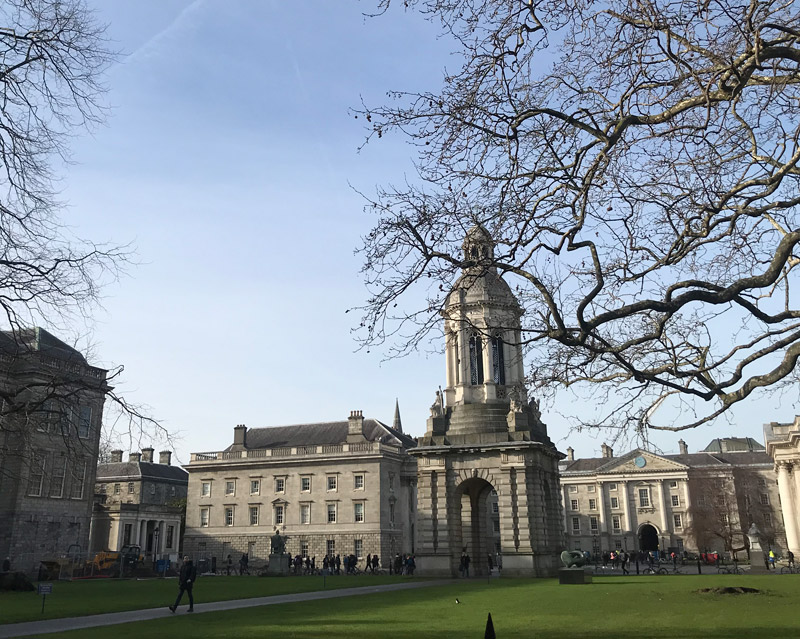
This program offers students the opportunity to earn both a bachelor’s degree from GC and an integrated Master’s degree (MAI; “Master in the Arts of Engineering”) from Trinity within five years. Students complete their first three years at GC, followed by study periods at Trinity during their senior year and a final year in the MAI program. The program covers key engineering disciplines such as Mechanical, Electronic, and Computer Engineering. As a globally renowned university with a strong emphasis on innovation and entrepreneurship, Trinity College Dublin provides students with access to world-class education and its unique MAI degree, which is typically only available to its own students.
About Trinity College Dublin (TCD)
Trinity College Dublin is a world-leading university with more than 400 years of history. It is situated in Dublin, close to the European headquarters of Google, Facebook, and many other internet and technology companies. It is first in Europe for producing entrepreneurs and has been ranked Ireland’s most innovative university.
Program Requirements:
Eligibility: GC Junior Students only
Minimum GPA: 3.1
Minimum TOEFL / IELTS: IELTS of 6.5 (no individual band below 6.0) or TOEFL 90 (writing no lower than 21)
GRE: Not required
Other requirements: None
Program Format and Schedule:
Students will complete their first three years of study at JI, then spend two terms in the senior year at TCD, studying in Year 4 of the MAI program. The terms at TCD run from September to late April and will finish before the start of the summer term. Students return to JI in the summer of the Senior year to complete their Bachelor degree, then continue their studies in Year 5 of the MAI at TCD.
Once students are accepted into the program, they will be able to continue to the MAI without an additional graduate application. However, they must “pass” Year 4, which (roughly speaking) means not failing any single course. The system used at TCD is similar to that of high schools, were all courses must be passed in order to advance into the following year. (There are procedures and make-up exams to help students in case of failing to pass a single course)
The study plan for the four majors mentioned above, including a complete list of course options, is attached.
Courses taken in Year 4 at TCD may be transferred to JI to count for the student’s bachelor degree.
Program Progression: 3.5+2
| Year 1 | Year 2 | Year 3 | Year 4 | Year 5 | ||
| Fall | Spr. | Sum. | ||||
| GC | TCD | GC | TCD | |||
New Zealand - University of Auckland

Program Details
The program with the University of Auckland offers GC students a seamless transition to pursue a Master of Science or Master of Data Science beginning in the Spring term (Term 1) in Auckland. Eligible applicants must complete 3.5 years at GC and meet English requirements. The Master of Science track requires a 2-year coursework + thesis (240 points), while Master of Data Science offers 2-year (240 points) or accelerated 1.5-year (180 points, with JI Data Science Minor) options, both emphasizing rigorous progression.
About University of Auckland
University of Auckland is the largest and highest-ranked university in New Zealand. Located in Auckland, the country’s largest and most international city, the university is globally recognized for its excellence in teaching, research, and innovation.
Application Requirements
Eligibility: GC Senior Students Majored in ECE only
Minimum GPA: 3.0 for Master of Science/2.70 for Master of Data Science
Minimum TOEFL: 90(Writing 21)
Course Requirement: Students will need to complete capstone course and compulsory courses for ECE by end of the Fall term at GC prior to the Spring term
Application Materials:
- Transcript for Years 1-3 at GC (compl. Junior year)
- TOEFL certificate
- Letters of recommendation
- Academic Statement of Purpose
- Personal Statement
- Résumé
Term dates of University of Auckland
Summer Term (early January – mid-February; minor term)
Term 1 (late February – early July; major term)
Term 2 (late July – late November; major term)
Application: Fall term, Senior year
Program progression: 3.5+2*
| Year 1 | Year 2 | Year 3 | Year 4 | Year 5 |
Year 6 | ||||
| Fall | Spr. | Sum. | Fall | Spr. | Sum. | Fall | |||
| GC | Auckland | ||||||||
*Fast track (3.5+1.5, completed by Y5 Summer) is available for GC students who declare a minor in Data Science
Singapore - Nanyang Technological University
Program Details
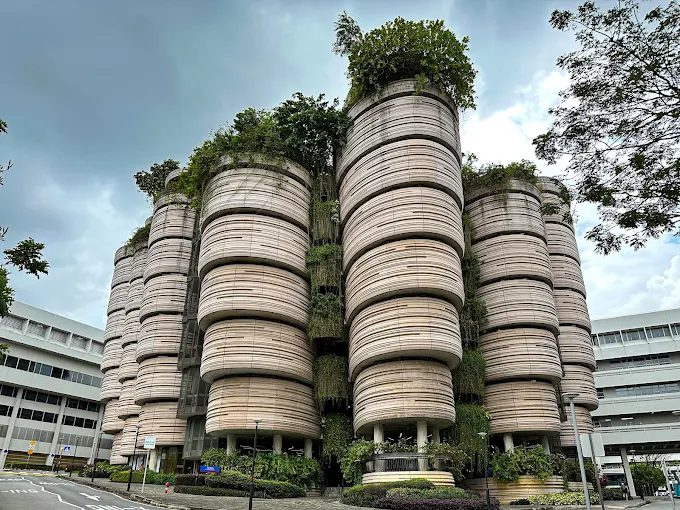
The GDP program with NTU will be offered through the School of Electrical & Electronic Engineering, the School of Mechanical & Aerospace Engineering, and the College of Computing & Data Science. Following a “3.5+2” structure, eligible GC students may apply in the fall of their junior year and, upon acceptance, commence their two-year master’s studies at NTU in the fall semester of their senior year. This initiative integrates the strengths of both institutions, promoting interdisciplinary education and innovative engineering training.
About Nanyang Technological University (NTU)
Founded in 1991, NTU is a globally recognized institution in Singapore, renowned for its excellence in engineering, science, business, and technology innovation. NTU consistently ranks among the world’s top universities, with a strong emphasis on research, innovation, and interdisciplinary collaboration.
Program Requirements:
Eligible students: Junior GC students
GPA bar: ideally above 3.2
Timeline for the program – Phase I, II and III
Phase I: Students spend the first three years of undergraduate studies at GC. During the fall semester of the junior year, students submit their applications to GC, then qualified students selected by NTU shall be issued admission to Phase II and a conditional admission to Phase III.
Phase II: One year of full-time study in NTU’s Bachelor programs at one of the engineering schools (options available in the below chart). Students shall take a minimum of 12 AU, up to a maximum of 36 AU of coursework approved by GC and NTU. Please download the course list on the bottom of this announcement. Students return to GC in the summer semester of the senior year to complete the remaining requirements of their respective undergraduate degrees.
Note: Students are not allowed to take courses outside the course list. Note no HU/SS courses are offered.
Phase III: One year of full-time study in NTU in a selected MSc program (options available in the below chart). Students can choose to complete 24 AU of coursework plus a dissertation (6 AU) or to complete 30 AU of coursework.
Phase II and III program and major options:
| NTU Engineering School (Major) | Phase II: NTU Bachelor programme | Phase III: NTU Master’s programme |
| School of Electrical & Electronic Engineering (EEE) | BEng (Electrical & Electronic Engineering) | MSc (Electronics) |
| MSc (Communications Engineering) | ||
| MSc (Power Engineering) | ||
| MSc (Signal Processing and Machine Learning) | ||
| MSc (Computer Control & Automation) | ||
| School of Mechanical & Aerospace Engineering (MAE) | BEng (Mechanical Engineering) | MSc (Robotics and Intelligent Systems) |
| MSc (Mechanical Engineering) | ||
| MSc (Smart Manufacturing) | ||
| MSc (Supply Chain Engineering) | ||
| College of Computing & Data Science (CCDS) | BComp (Computer Science) | MSc (Artificial Intelligence) |
| MSc (Data Science) | ||
| MSc (Cyber Security) |
Application: Fall term, Junior year
Program progression: 3.5+2
| Year 1 | Year 2 | Year 3 | Year 4 | Year 5 | ||
| Fall | Spr. | Sum. | ||||
| GC | NTU | GC | NTU | |||
Singapore - National University of Singapore

Program Details
The program offers an accelerated pathway for GC junior students to earn both their bachelor’s and master’s degrees from National University of Singapore (NUS). The program begins with a “First +1” year at NUS College of Design and Engineering (CDE), where students complete undergraduate coursework while optionally taking graduate-level classes. Students progress to the “Second +1” year to pursue a Master of Science in Mechanical Engineering or Robotics. Admitted students benefit from NUS’s Top 10 globally ranked engineering programs while developing research expertise in Singapore’s innovation ecosystem.
About The NUS College of Design and Engineering (NUS CDE)
The NUS College of Design and Engineering (NUS CDE) offers a world-class education led by highly accomplished professors and dedicated lecturers, distinguished by its position as Asia’s 1st and the world’s 8th university according to the QS World University Rankings 2026. Students can choose from 28 master’s coursework programmes tailored to their aspirations, benefiting from an institution that is ranked in the global top 10 for six subjects: Architecture/Built Environment, Chemical Engineering, Civil & Structural Engineering, Electrical & Electronic Engineering, Materials Science, and Mechanical, Aeronautical & Manufacturing Engineering.
The first “+1” at NUS
NGNE (non-graduate/non-exchange) students to take undergraduate courses (including FYP: Final Year Project) at NUS to fulfil the graduation requirements of the GC undergraduate degree:
First “+1” is with Department of Mechanical Engineering, College of Design and Engineering (CDE) only
Minimum 12 Units (equivalent to 3 courses) per semester for 2 semesters (inclusive FYP)
Students are allowed to take up to 10 units graduate courses and can transfer the credit to graduate (second “+1”) period
Students can advance to MSc programs if their NUS First “+1”GPA is 3.5/5 and above
The second “+1” at NUS
Master of Science (M.Sc.) in Mechanical Engineering or Robotics at NUS/Course work programs
- Students with a NUS GPA of 3.5/5 or above in First “+1” may apply and be admitted for the MSc programs in Mechanical Engineering or Robotics at NUS.
- The second “+1” phase has a minimum duration of 10 months (August to May)
- Students must complete a minimum of 40 credits over two semesters and achieve a NUS GPA of 3.0/5 or above to graduate and be awarded a Master of Science degree from NUS.
Program Requirements:
Eligible students: Junior GC students
GPA bar: ideally above 3.2
English: TOEFL 90 and above/IELTS 6.5 and above
Application: Fall term, Junior year
Program progression: 3.5+2
| Year 1 | Year 2 | Year 3 | Year 4 | Year 5 | ||
| Fall | Spr. | Sum. | ||||
| GC | NUS | GC | NUS | |||
Sweden - Royal Institute of Technology

Program Details
The program with KTH Royal Institute of Technology is offering both junior and senior GC students the opportunity to pursue a 2-year master’s program. Junior students may apply for the 3.5+2 pathway, while seniors enter directly into the regular 2-year program. There are no strict GPA requirements, but applicants must meet the English proficiency standard. Scholarship opportunities include one- or two-year tuition exemptions based on academic and interview performance.
About Royal Institute of Technology
KTH Royal Institute of Technology, established in 1827 in Stockholm, Sweden, is a prestigious university that hosts a vibrant community of people from more than one hundred nations. It serves approximately 14,000 full-time students alongside a strong research community of 1,500 PhD students, and it welcomes 2,900 new students into its master’s programs annually, as recorded in 2024, as well as 300 new PhD students each year. The faculty comprises 600 members, supporting an institution that consistently ranks among the world’s top universities, holding the 78th position in the QS ranking for 2025 and 95th in the Times Higher Education ranking. KTH excels particularly in engineering, with its highest QS subject ranking being 25th for Mechanical Engineering, while numerous other subject areas also achieve rankings well within the top 100 globally.
Program Requirements:
Both junior and senior students are eligible to apply.
Note senior students will apply to the regular program which is 2 years.
TOEFL: 90 (Writing 20. Please do apply with a language score that meets the requirement)
GPA: No specific requirements
Space: No limit.
Programs available:
Starting from 2025, KTH has removed program matching restrictions, allowing GC students to apply to all master’s programs across engineering and technology fields, including but not limited to:
Engineering Design
Engineering Mechanics
Naval Architecture
Vehicle Engineering
Machine Learning
Media Management
Electrophysics
Electric Power Engineering
Network Services and Systems
Systems, Control and Robotics
Wireless Systems
Embedded Systems
Communication Systems
Medical Engineering
Program progression: 3.5+2
| Year 1 | Year 2 | Year 3 | Year 4 | Year 5 | ||
| Fall | Spr. | Sum. | ||||
| GC | KTH | GC | KTH | |||
United States - North Carolina State University

Program Details
The program with North Carolina State University (NCSU) offers senior students the opportunity to earn both a Bachelor’s degree from GC and a Master of Science degree from NCSU within five years. Available majors for application include Mechanical Engineering, Electrical Engineering, and Computer Engineering, offering students in these fields a direct pathway to advanced study. Participants will begin their graduate coursework at NCSU during the fourth year while completing their undergraduate degree at GC.
About North Carolina State University
North Carolina State University (NCSU), founded in 1887 and located in Raleigh, North Carolina, is a leading public research university in the United States. It is particularly strong in engineering, computer science, and applied sciences, with robust research capabilities and close industry connections, providing students with high-quality education and excellent career opportunities.
Application Requirements:
Eligibility: GC Senior Students Only
Minimum GPA: 3.0
Minimum TOEFL: 75
Application Materials:
- Completed application form
- Copy of passport
- Passport sized photograph
- A current undergraduate transcript
- TOEFL / IELTS test results
- Academic statement
- CV / Resume
- Two letters of recommendation from course instructors
Programs available:
Mechanical Engineering, Electrical Engineering, and Computer Engineering
Program progression: 3.5+2
| Year 1 | Year 2 | Year 3 | Year 4 | Year 5 | ||
| Fall | Spr. | Sum. | ||||
| GC | NCSU | GC | NCSU | |||
United States - University of California at Irvine

Program Details
This pathway allows students to obtain a Bachelor’s degree from GC and a Master’s degree at UCI after a total of five years of study.
The following majors are available:
- Mechanical Engineering (one of the following major areas of study: Design Engineering, Dynamics & Control, Fluid Dynamics, Solid / Structural / Material Mechanics, Transport & Thermal Sciences)
- Electrical and Computer Engineering (EE or CE concentration)
- Material Science and Engineering
Students may select the MSE degree also if their previous major at GC is ECE or ME; the degree is adapted to cross-over majors.
About UCI Samueli School of Engineering
Founded in 1965, the Henry Samueli School of Engineering educates more than 4,600 students (3,728 undergraduates and 961 graduates) with an integrative approach that blends fundamentals, research and hands-on experience. The school’s aim is to unleash innovation, create opportunities and inspire ingenuity. The Samueli School’s faculty members are leaders in their disciplines who have achieved worldwide recognition for their research and dedicated teaching. The school includes six academic departments: biomedical engineering; chemical and biomolecular engineering; civil and environmental engineering; electrical engineering and computer science; materials science and engineering; and mechanical and aerospace engineering. Under the leadership of Dean Gregory Washington, the school pursues research that is timely, socially responsible and cutting edge, and works in partnership with industry and state and federal agencies to promote the transfer of research to applications that benefit society. Current research thrusts include Communications and Information Technology, Energy and Sustainability, Human Health, and Advanced Manufacturing and Materials.
Program Requirements:
Minimum GPA: 3.0
Recommended GPA: 3.0
Minimum TOEFL / IELTS: IELTS of 6.5 or TOEFL 80
GRE: Not required
Eligibility: Only for Junior students at GC.
Space: No limit.
Master program options: ME, ECE MSE
Program Format and Schedule:
Students will complete their first three years of study at GC, then spend two terms in the senior year at UCI, taking up to six credits of graduate courses. The remaining (undergraduate) courses taken at UCI may be freely chosen and used to complete the requirements of the Bachelor degree at GC. The terms at UCI run from September to late April and will finish before the start of the summer term at GC. Students return to GC in the summer of the Senior year to complete their Bachelor degree, then continue their studies at UCI.
After commencing the program in the Senior year at UCI, students will need to apply for formal admission into the Master’s program.
The study plan for the majors mentioned above, including a complete list of course options, is attached.
Courses taken in the Senior year at UCI may be transferred to GC to count for the student’s bachelor degree, if they are not also used for the master’s degree at UCI.
Program progression: 3.5+2
| Year 1 | Year 2 | Year 3 | Year 4 | Year 5 | ||
| Fall | Spr. | Sum. | ||||
| GC | UCI | GC | UCI | |||
United States - University of Michigan


Master of Science in Electrical and Computer Engineering
In today’s environment of rapid and transformational change, one thing is constant: the advantages of a Michigan Electrical and Computer Engineering (ECE) education. ECE provides you with all the tools you need to be a leader in technology, scientific discovery, or any career of your choice.
As an ECE student, you will enjoy the many advantages that come from engaging with world-renowned faculty in a top-10 ranked program – in an exciting community that values diversity, teamwork, new ideas, and YOU. In 2019, our Electrical Engineering program was ranked #6 and our Computer Engineering program is ranked #7 in the world, according to US News and World Report.
Eligible Global College Majors
Electrical Engineering, Computer Engineering
Application Requirements
The ECE global degree pathways program is designed for students receiving Electrical and Computer Engineering (ECE) degrees from SJTU Global College. Students should demonstrate success in technical coursework relevant to the student’s intended major area in the graduate program (i.e. Embedded Systems, Robotics, etc.). Any research or work experience will also be considered by the admissions committee. To be eligible, applicants must have a cumulative GPA of 3.6 or higher. The GRE is not required. A minimum TOEFL score of 84, or IELTS score of 6.5, is required.
Master of Science in Mechanical Engineering
The Mechanical Engineering (ME) department at the University of Michigan takes a multidisciplinary approach to research and learning. The Master’s program strikes a unique balance of trend- setting research, challenging coursework and real-world impact that is highly respected around the world. This pathway helps students directly pursue their ME Master’s degree and typically requires one term fewer than had they applied to other programs.
Eligible Global College Majors
Mechanical Engineering
Application Requirements
This program is designed for students who receive an undergraduate ME BSE degree from SJTU Global College and wish to pursue a Mechanical Engineering Master’s degree at UM. Students will apply to UM through the Rackham Graduate School application. Applicants must have a cumulative GPA of 3.5 or higher from SJTU. The GRE is waived, however the TOEFL is required and a minimum score of a 100 is preferred. All applications are reviewed by the Graduate Admissions Committee and admission is granted on a case-by-case basis.
Master of Science in Engineering, Naval Architecture and Marine Engineering (NAME)
The mission of the Naval Architecture and Marine Engineering (NAME) Department is to be a world leader in the education of engineers in the application of engineering principles for the marine environment by providing the leading graduate education and research program in engineering for the marine environment, one which spans a broad range of inquiry.
Eligible Global College Majors
Electrical Engineering, Materials Science and Engineering, Mechanical Engineering.
Application Requirements
Applicants for the degree normally hold a BSE in naval architecture and marine engineering. However, the graduate program has been structured so that students with a bachelor’s degree in other engineering disciplines that require knowledge of basic mechanics such as mechanical engineering, applied mechanics, aerospace or civil engineering may also start directly on their master’s program. To be eligible, applicants must have a cumulative GPA of 3.2 or higher. The GRE and TOEFL are required. A minimum TOEFL score of 84 is preferred.
Program progression: 4+1
| Year 1 | Year 2 | Year 3 | Year 4 | Year 5 |
| GC | U-M | |||
Master of Science or Master of Landscape Architecture
The University of Michigan is the #1 ranked public university in the US, according to the Wall Street Journal and Times Higher Education (2022). The School for Environment and Sustainability (SEAS) at U-M provides the training and networking opportunities you need to become a leader in the field of sustainability. Our interdisciplinary approach joins natural and social scientists, designers, policy-makers, engineers, and other disciplines. The Accelerated Master’s Degree Program (AMPD) or Global Degree Pathways (GDP) integrates a 2-year Master of Science (MS) or 3-year Master of Landscape Architecture (MLA) into an accelerated curriculum for Global College students.
Eligible Global College Majors
Electrical and Computer Engineering;Mechanical Engineering;Materials Science and Engineering.
Application Requirements
Applicants to the SEAS AMD will first apply as non-degree applicants to the University of Michigan College of Literature, Science, and the Arts (LSA). To receive a copy of the brief LSA non-degree application, please email seas-admissions@umich.edu. The deadline to apply for Fall admission is April 1. Students will apply to formally begin their SEAS studies through the Rackham Graduate School application portal by December 15 of their first year in the AMD. Any questions about this process can be sent to seas-admissions@umich.edu.
SEAS does not require or review GRE scores or any other graduate/professional aptitude exam scores. You must demonstrate English proficiency via a TOEFL (minimum of 84) or IELTS (minimum of 6.5) score. There’s no minimum GPA needed to apply. Please contact SEAS Admissions for additional information, please email us at seas-admissions@umich.edu.
Program progression: 3.5+2
| Year 1 | Year 2 | Year 3 | Year 4 | Year 5 | ||
| Fall | Spr. | Sum. | ||||
| GC | U-M | GC | U-M | |||
One-Year Master’s Program at Ross School of Business
Michigan Ross is committed to building a better world through business. Through our powerful ideas, purpose-driven leaders, and positive impact, we empower business leaders to make a positive difference in the world.
At Michigan Ross, we are leaders, researchers, and lifelong learners creating innovative solutions to the world’s most complex business challenges. We are a top-ranked business school offering action-based learning to prepare our graduates for today’s ever-evolving world. Our impact extends far beyond the classroom as we aim to set a new standard in business and business education.
Eligible Global College Majors
Electrical and Computer Engineering;Mechanical Engineering;Materials Science and Engineering.
Application Requirements
- Minimum GPA: No specific requirements
- Recommended GPA: No specific requirements
- Minimum language requirement: TOEFL 100 (no specific requirement on section scores). IELTS is not accepted
- GRE: Required
GC students are allowed to apply to one of the following programs at Ross:
- Master of Management
- Master of Supply Chain Management
- Master of Accounting
- Master of Business Analytics
Program progression: 3.5+1
| Year 1 | Year 2 | Year 3 | Year 4 | Year 5 | ||
| Fall | Spr. | Sum. | ||||
| GC | GC | U-M | ||||
Master of Science in Information
The Master of Science in Information (MSI) is a professional degree preparing students for careers in Information. This degree program offers a hands-on curriculum with a multidisciplinary approach to the study of information. We offer a Global Degree Pathway (GDP) program in the following areas:
- Data Science and Analytics
- User Experience (UX) Research and Design
- User-Centered Agile Development
- Other options available for review upon request
Graduates are highly sought after and go on to leadership roles within the field of information in organizations around the world.
Eligible Global College Majors
Electrical and Computer Engineering; Mechanical Engineering; Other majors can be evaluated upon request.
Application Requirements
Detailed information and instructions for applying can be found on the UMSI website at si.umich.edu.
- Students should apply their junior year
- TOEFL required:
Preferred minimum score of 100. Students interested in the program are encouraged to apply if their score is close.
- No Graduate Record Exam (GRE) required
- Typical grade point average (GPA) is 3.5
- Applications receive a holistic review
- Essays should follow the prompts and be sure to show strong interest in MSI areas of study.
Program progression: 3.5+2
| Year 1 | Year 2 | Year 3 | Year 4 | Year 5 | ||
| Fall | Spr. | Sum. | ||||
| GC | U-M | GC | U-M | |||
Accelerated Master’s Degree Program in Applied Statistics
There is an increasing demand for students with background in applied statistics in industry, government and higher education. This program provides a fast track for undergraduate students with strong mathematical and computing backgrounds to obtain a Master’s degree in applied statistics from the University of Michigan. With the massive amount of data collected in the world every second, statisticians at all levels are needed to help make sense of this data, quantify uncertainty, develop new tools and methodologies, and analyze their properties.
Eligible Global College Majors
Electrical and Computer Engineering; Mechanical Engineering; Materials Science and Engineering.
Application Requirements
Applicants should have taken a year sequence in calculus, a course on linear algebra, basic probability and statistics, and a course on computing (via a programming language). Strong candidates have a cumulative GPA of 3.2 or higher. Competence in English can be demonstrated through standard tests including MET, IELTS, or TOEFL. Additional information and detailed instructions of the application process can be found on the U-M STATS website at lsa.umich.edu/stats.
Program progression: 3.5+2
| Year 1 | Year 2 | Year 3 | Year 4 | Year 5 | ||
| Fall | Spr. | Sum. | ||||
| GC | U-M | GC | U-M | |||
United States - University of Southern California

Program Details
The program with the University of Southern California (USC) offers GC junior students an exceptional opportunity at one of America’s top private research universities. Students can choose from USC Viterbi School’s prestigious graduate programs across 10 engineering and technology disciplines, including Computer Science, Data Science & Cybersecurity, Electrical Engineering, and Biomedical Engineering. With no minimum GPA requirement and GRE waived, applicants need only demonstrate English proficiency. The streamlined application process requires submission of the USC Graduate Application followed by GC’s endorsement.
About University of Southern California
The University of Southern California (USC), located in the heart of Los Angeles, is an innovative private research university that uniquely combines the autonomy for exploration emblematic of a private institution with the size, resources, and academic breadth typically associated with a public university. Consistently rated among the top higher education institutions in California, USC is renowned for its academic excellence and pioneering research opportunities, as well as its diverse and inclusive campus environment that attracts students from across the U.S. and around the world. Since its founding in 1880 with just 53 students and 10 teachers, the university has grown dramatically alongside the city it calls home, now enrolling more than 48,000 students and employing over 4,400 full-time faculty in one of the world’s largest metropolitan centers.
Application Requirements:
Minimum GPA: No specific requirement
Recommended GPA: No specific requirement
Minimum TOEFL / IELTS: TOEFL 90, with no less than 20 on each section or an IELTS score of 6.5, with no less than 6 on each band score.
GRE: Not required
Eligibility: Only for Junior students at GC.
Space: No limit.
Program progression: 3.5+2
| Year 1 | Year 2 | Year 3 | Year 4 | Year 5 | ||
| Fall | Spr. | Sum. | ||||
| GC | USC | GC | USC | |||